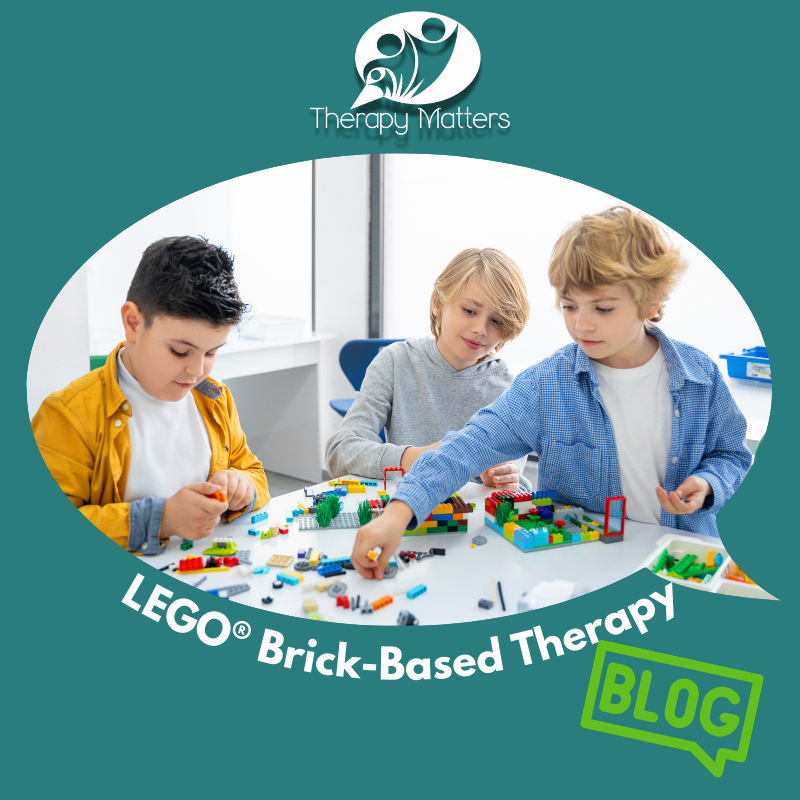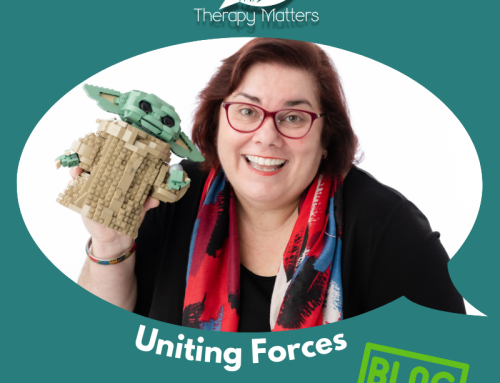
LEGO® Brick Based Therapy is an evidence-based intervention that uses structured LEGO® play to support the development of social communication skills within small groups. Sessions are delivered by qualified health, education and care professionals who are trained to follow a research-informed model.
Originally developed in the mid-1990s by paediatric neuropsychologist Dr Daniel LeGoff, the approach was inspired by observing two autistic children in his waiting room engage in rich, meaningful social interaction while building with LEGO®. What began as a simple observation grew into a well-researched therapeutic framework that continues to evolve today.
While initially designed for autistic children, research has since shown LEGO® Brick Based Therapy can benefit children with a wide range of other communication and social differences, including ADHD, Developmental Language Disorder (DLD), anxiety, learning difficulties, intellectual disability, and speech and language difficulties.
At Therapy Matters, we have been delivering LEGO® Brick Based Therapy for over five years, affectionately known as Brick Club.
In 2026, we expanded this work by launching Brick Therapy Matters and becoming an International Training Partner with Play Included® — the world’s leading provider of brick based therapy training. Through this partnership, we offer:
- Certified Facilitator Training (online from 2026)
- Advanced Training (in-person from 2027)
These programs support Australian therapists and teachers to deliver LEGO® Brick Based Therapy with fidelity, confidence and integrity.
What are the benefits of LEGO Brick Based therapy?
Playing with LEGO® in a therapeutic context provides powerful opportunities to develop:
- Social interaction and collaboration
- Turn-taking, sharing and teamwork
- Perspective taking and problem-solving
- Language and communication skills
- Motor skills
- Self-advocacy
- Confidence, wellbeing and neurodivergent pride
By using a tool that many children already love, LEGO® Brick Based Therapy capitalises on intrinsic motivation, allowing children to showcase their strengths in a social setting. The structured format creates a safe space to practise social problem-solving, learn from mistakes, celebrate successes, and transfer these skills into everyday life.
For many neurodivergent children, unstructured play can feel overwhelming or unpredictable. LEGO® Brick Based Therapy offers a highly structured, predictable environment, where each child has a clear role and purpose, helping them feel calm, supported and confident.
What does research say?
Research has demonstrated positive outcomes from the perspectives of children, therapists, educators and researchers, including:
- Improved social skills in school settings (Wright et al., 2023)
- Cost-effective, feasible and highly acceptable programs for schools (Barr et al., 2022)
- Reduced anxiety and increased engagement through play-based delivery (Choy, Mc Guckin & Twomey, 2022).
- Gains in social competence, communication, confidence, collaboration and wellbeing (LeGoff, 2004)
- Increased social interactions outside therapy sessions (LeGoff & Sherman, 2006)
- Sustained benefits over time (Owens et al., 2008)
- Organic peer support and meaningful social learning within groups (Owens et al., 2008)
What happens during a LEGO® Brick Based Therapy session?
To achieve these outcomes, sessions must be delivered by a trained facilitator who follows a specific, research-aligned format.
Each child takes on one of three rotating roles:
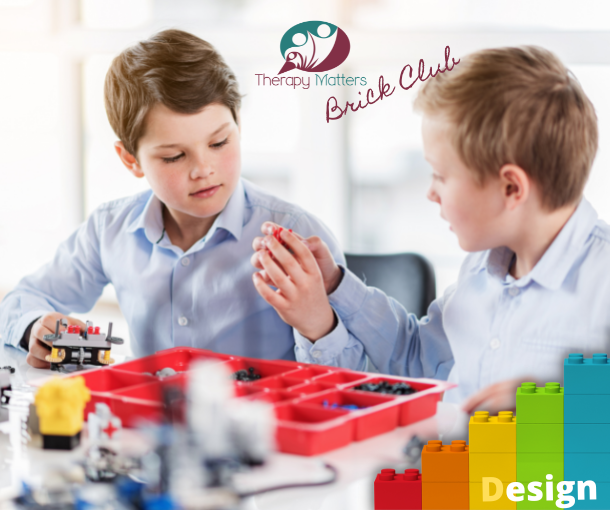
The Engineer: Reads and communicates the instructions, telling the Supplier which pieces are needed and guiding the Builder on how to assemble the model.
The Supplier: Listens carefully to the Engineer’s instructions and then finds and provides the correct LEGO® pieces to the Builder.
The Builder: Constructs the model by following instructions from the Engineer and collecting pieces from the Supplier.
This structure allows children to practise a wide range of skills, including expressive and receptive language, turn-taking, negotiation, perspective taking and collaborative problem solving. It also encourages children to reflect on their own actions and skills as well as give constructive feedback and compliments to their peers.
Is LEGO® Brick Based Therapy right for my child?
LEGO® Brick Based Therapy can be a wonderful fit for many children, particularly when three key elements come together: the child, the facilitator and the organisation.
Your Child: LEGO® Brick Based Therapy may be suitable if your preschool to adolescent child:
- Has an interest in LEGO® or enjoys building activities
- Has goals that are difficult to achieve in 1:1 therapy and are better supported in a small group setting
- Would benefit from practising social communication skills in real-life, supported interactions with peers
- Learns best when working alongside children who are a “just right” match for their abilities, needs and learning style
This approach is especially helpful for children who need supported opportunities to practise collaboration, communication and problem-solving in a safe and predictable environment.
The Facilitator: The outcomes of LEGO® Brick Based Therapy depend heavily on the skills and training of the facilitator. A suitable facilitator should:
- Be a qualified health, education or care professional
- Have completed certified training or rigorous research-based learning in LEGO® Brick Based Therapy
- Deliver sessions in a way that aligns with the research and established therapy model
- Work from a neurodiversity-affirming framework, recognising and valuing each child’s strengths
At Therapy Matters, our therapists and therapy assistants complete certified training through Play Included®. Play Included® is a global leader in LEGO® Brick Based Therapy training, delivery and research. They are the only organisation endorsed by the LEGO Foundation, and their Brick-by-Brick Programme® was designed by a co-author of the original LEGO® Based Therapy manual that underpins contemporary research.
The Organisation: High-quality LEGO® Brick Based Therapy should be delivered by organisations that demonstrate:
- A strong commitment to neurodiversity-affirming practice
- Ethical advertising practices that respect children’s privacy and uphold LEGO® Fair Play policies
- Robust child protection policies and professional codes of conduct
- Thoughtful group design, with children carefully matched to support individual and group success
- Ongoing monitoring of progress and a commitment to evidence-based practice
- Safe, supportive and sensory-aware environments that meet the needs of all children
When the right supports are in place, LEGO® Brick Based Therapy provides children with a meaningful pathway to grow social communication skills, confidence and connection. Therapy Matters is dedicated to supporting children through ethical, safe and neurodiversity-affirming care.
Where can I learn more?
- Explore our Brick Club and School Holiday COINS Programs
- Book Certified Facilitator Training through Brick Therapy Matters
- Learn more at Play Included®
- Read more below about LEGO® Brick-Based Therapy
References
Barr, A., Coates, E., Kingsley, E., de la Cuesta, G. G., Biggs, K., Le Couteur, A., & Wright, B. (2022). A mixed methods evaluation of the acceptability of therapy using LEGO® bricks (LEGO® based therapy) in mainstream primary and secondary education. Autism Research, 15(7), 1237–1248. https://doi.org/10.1002/aur.2725
LeGoff, D.B. (2023). LEGO-Based Therapy: Current theory and practice. Boca Raton, FL: Universal Publishers.
LeGoff, D. B. (2017). How LEGO-based therapy works: Landing on my planet. Jessica Kingsley Publishers.
Legoff, D.B. (2004) Use of LEGO© as a Therapeutic Medium for Improving Social Competence. J Autism Dev Disord. 34(5):557–571. doi: 10.1007/s10803-004-2550-0.
Legoff, D.B. & Sherman, M. (2006) Long-term outcome of social skills intervention based on interactive LEGO© play. Autism. 10(4):317–329. doi: 10.1177/1362361306064403.
Legoff, D.B., Gomez De La Cuesta. G., Krauss, G.W., Baron-Cohen, S., (2014). LEGO-Based Therapy: How to build social competence through Lego-Based Clubs for children with autism and related conditions. Jessica Kingsley Publishers.
Owen-DeSchryver JS, Carr EG, Cale SI, et al. Promoting Social Interactions Between Students With Autism Spectrum Disorders and Their Peers in Inclusive School Settings. Focus Autism Dev Dis. 2008;23(1):15–28. doi: 10.1177/1088357608314370.
Choy, S. W.-W., Mc Guckin, C., & Twomey, M. (2022). Design a School Group Play Programme for Reducing Anxiety in Children Aged 4 to 6 Years with and without Autism Spectrum Disorder: A Scoping Review. International Journal of Childhood Education, 3(1), 37–57. https://doi.org/10.33422/ijce.v3i1.38.
Wright, B., Kingsley, E., Cooper, C., Biggs, K., Bursnall, M., Wang, H. I., Chater, T., Coates, E., Teare, M. D., McKendrick, K., Gomez de la Cuesta, G., Barr, A., Solaiman, K., Packham, A., Marshall, D., Varley, D., Nekooi, R., Parrott, S., Ali, S., Gilbody, S., Le Couteur, A. (2023). I-SOCIALISE: Results from a cluster randomised controlled trial investigating the social competence and isolation of children with autism taking part in LEGO® based therapy (‘Play Brick Therapy’) clubs in school environments. Autism : the international journal of research and practice, 27(8), 13623613231159699. Advance online publication. https://doi.org/10.1177/13623613231159699
Disclaimer: LEGO® is a trademark of the LEGO Group of companies which does not sponsor, authorize or endorse this site.